


























When you picture Chinese food in Jakarta, what first comes to mind? Xiao long bao from Din Tai Fung? Hotpot from Haidilao? For many people, especially those newer to the city, these familiar international chains end up defining Chinese food in Jakarta, alongside mainstream Chinese-style chains like Bakmi GM.
But long before those names took over malls and main roads, Chinese immigrants had already settled across different areas of Jakarta, bringing their cooking with them and gradually adapting it to Indonesian tastes. That history is what defines the Chinese-Indonesian fusion cuisine, with Chinese roots reworked through local ingredients and flavors. Over generations, these restaurants have come to carry the character of the local communities where they developed.
Here are three of my favorite restaurants that show how Chinese-Indonesian fusion cuisine varies across Jakarta, from stronger Chinese influences to styles that feel increasingly Indonesian.
Sanur Restaurant
Jl. Ir. H. Juanda 3 No.31J 9, Gambir, Jakarta Pusat
For a traditional Chinese family-style dining experience, head to Sanur Restaurant, which has been around since 1976. Sanur began with a chef who brought his recipes from Hong Kong, and is now continued by his brother, who has preserved the restaurant’s style and character first introduced nearly fifty years ago.
The space exudes a warm and established atmosphere with beige walls, touches of Chinese decor, and round, rotating, tables made for sharing family-style dishes.
The sotong (squid) is one of my favorite dishes in all of Jakarta. It comes out lightly charred, coated in a barbeque-like glaze that leans subtly sweet, adapted to Javanese taste. The dish might feel slightly outside your comfort zone at first, especially with its glossy brown appearance and softer, almost slippery texture, but that is part of what makes it so distinct.
Alongside it, the nasi goreng ikan asin (fried rice with salted fish) brings crunch and a savory edge. There is also the isit asparagus, shark fin with white asparagus soup-—a more classic Hong Kong dish that feels rich and comforting.
Sanur’s menu is characterized by the influences behind it, intertwining Hong Kong-style dishes and Chinese staples with touches of Indonesian sweetness. Beyond the dishes themselves, the communal style of dining, with everything shared around the table, makes the restaurant especially worth visiting for a more traditional Chinese family-style dining experience.
Bakmi Orpa
Jl. Pluit Permai No.16, Pluit, Jakarta Utara
For a simple meal, and one that you can eat everyday, Bakmi Orpa sits tucked between small local shops along the roadside, already busy by 7 a.m. The restaurant first started in 1958 in Roa Malaka, where the owner first sold dishes in his own neighborhood, and that same close, local, feel still carries through today, even decades later. Just as restaurant has been passed down through generations, many of its diners have too. I grew up eating here, like my parents did before me, who were first brought here by my grandparents.
The space is a reflection of that long-standing history—simple with around a dozen plastic tables, wooden chairs, and one artwork hanging against otherwise plain white walls. You order first, then wait, attentively watching the room for a table to open up while people move quickly around you. It may be busy and slightly chaotic at first, but easy to settle into once you are there.
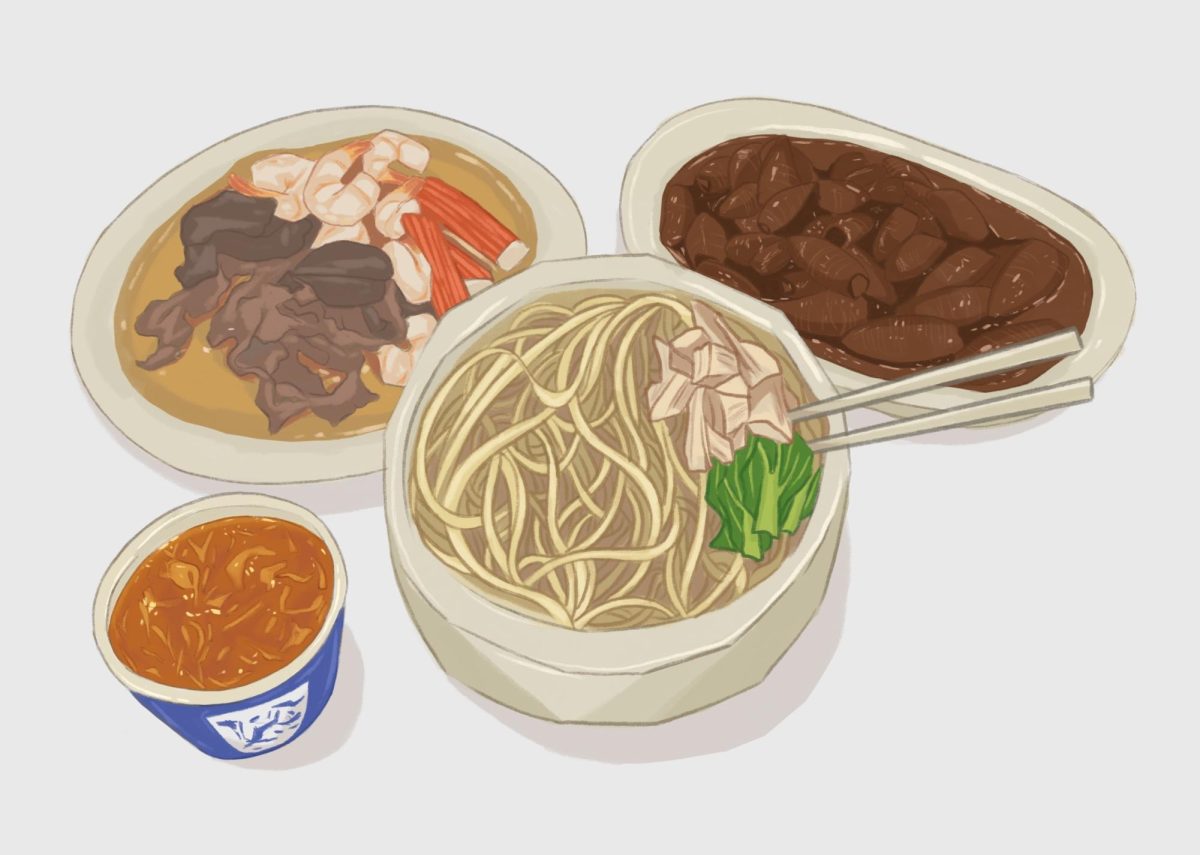
The bakmi ayam + babi (chicken and pork noodles) is what most people come for. Bakmi is a wheat noodle dish originally brought by Chinese immigrants, now a quintessential representation of Chinese-Indonesian fusion. While the dish traditionally used pork, the most common version in Indonesia uses chicken to better accommodate the country’s majority Muslim population. Here, the bowl combines both chicken and pork. The noodles, not too thin and not too thick, are coated in pork oil and topped with slightly sweet minced pork, along with slices of tender chicken.
I usually also order bakso goreng (deep-fried meatballs) before finishing with bola ubi (deep-fried sweet potato balls)—crisp on the outside and soft inside. As a refreshing treat to balance everything out, their teh susu (milk tea) is the perfect choice.
The addition of chicken, the sweetness of the toppings, and the sambal (Indonesian chili sauce) often served alongside bakmi all reflect how Chinese noodles were adapted to Indonesian tastes.
Bakmi Orpa is one of those consistently reliable places to come back to when you want something comforting. More than that, the restaurant is tied to the people around it, with regulars who have been coming for years and a kind of everyday community built around neighborhood places like these.
Hay Thien
Jl. Puri Indah Raya A No.11, Kembangan, Jakarta Barat
A more interactive option, and perhaps the most distinctly Indonesian in style, is Hay Thien. You order by selecting from a menu of ingredients, and the staff cooks everything in a steamboat right in front of you. The style sits somewhere between hotpot and shabu-shabu. There are locations across Jakarta, from Kelapa Gading to Mangga Besar. The dining concept goes back to 1994, when it was a roadside hotpot setup in Gajah Mada, and that same informal, pick-your-own, style still defines it.
The space feels bright and energetic, with vivid yellow walls covered in playful drawings of vegetables and meats, matching yellow chairs, and warm hanging lamps. All the pops of yellow give the restaurant a lively and highly social atmosphere.
The ingredients draw from Chinese cooking, with vegetables like pokcai (bokchoy) and tao miao (pea shoots), along with tofu, dumplings, and seafood. I usually go for sliced beef, fish sticks, pangsit (wontons), and kembang tahu (bean curd skin). There are also menu sections for hot plates and sate (grilled meat skewers). The shrimp hot plate arrives sizzling with a lightly caramelized finish, while the sate babi cha siu, Chinese barbeque pork skewers, is charred and sweeter.
The strong Indonesian influence comes through in everything within the dining experience. Once cooked in the light chicken broth, ingredients are mixed in minyak wijen (sesame oil) and almost always eaten with sambal. The sambal bawang (shallot chili sauce) is chunky and spicy, while their signature Hay Thien sambal is smoother and slightly sweet, and mixing them in elevates the dish.
They also serve Indonesian desserts, my favorite being es cendol, a shaved ice dessert topped with green rice-flour jelly, coconut milk and pineapple. Cold and refreshing, it feels especially satisfying after the heat of the sambal and broth.
Hay Thien is the perfect restaurant to go for a fun, Indonesian-influenced dining experience. Do not be surprised if you find your group still gathered around the hotpot, laughing, after all the food has already been devoured.
For those of us used to the same familiar chains and polished mall restaurants, places like these show a side of the city that is oftentimes overlooked. Stepping outside that comfort zone, and into dining spaces that are louder, smaller, busier, or more chaotic, often leads to heartier meals and richer stories. Just as importantly, it exposes us to the ingredients that continue to spice the cultural landscape of Jakarta today, far beyond the malls most of us know first.