





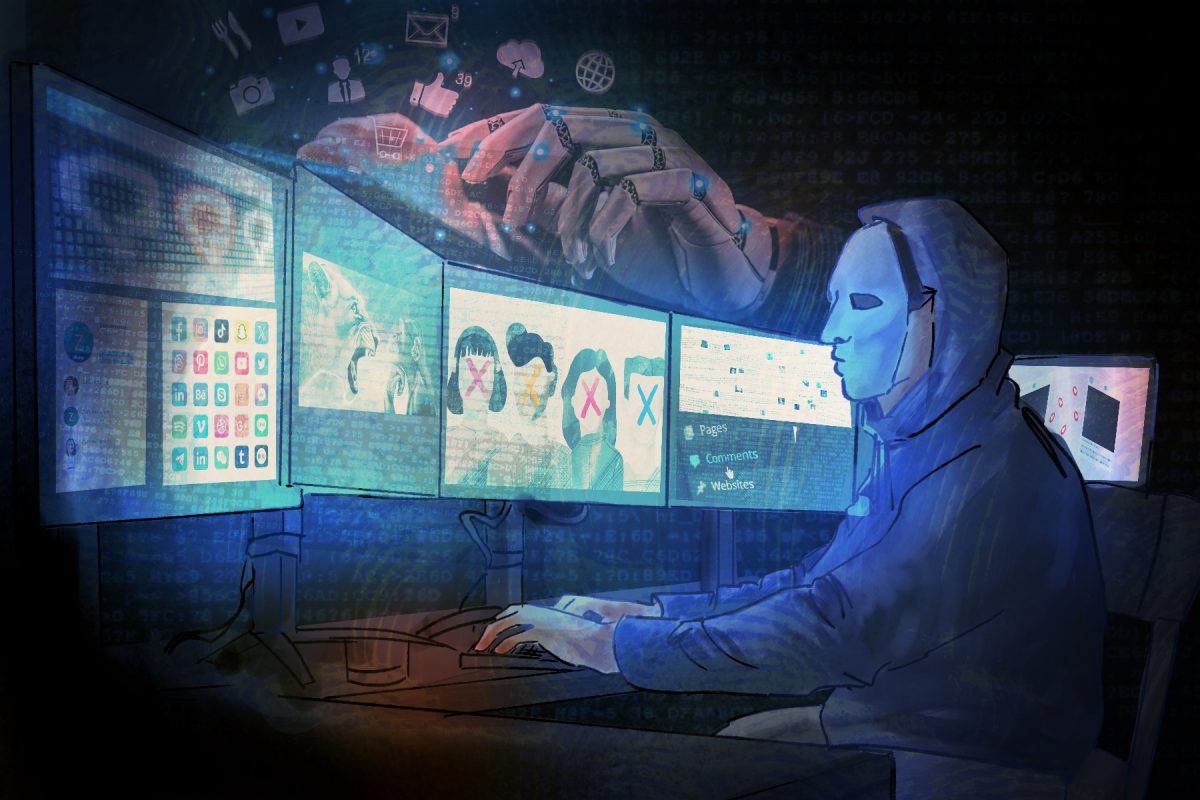
Usually when you meet someone, the first thing you see is their face. It is the initial impression you get of a person. The same can be said for profiles online, although on social media, you can change and edit your face however you please. In a world where everything you learn about someone can be found online, the things individuals post can come to affect how they are perceived offline.
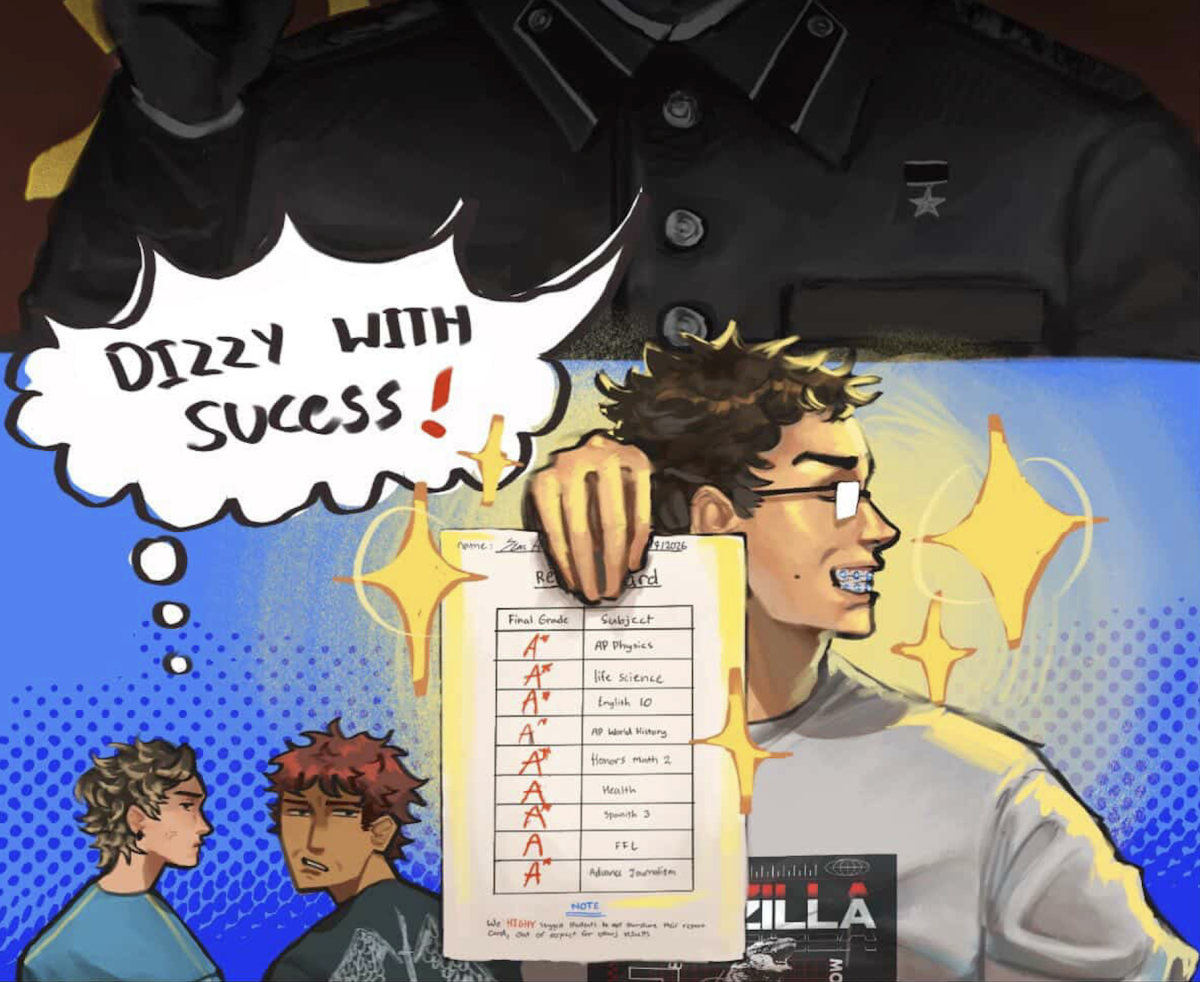
As teens become more focused on their online alter egos, we start to accessorize and perfect our profiles. Adding highlights, achievements, and links in our biographies, documenting our experiences, to appear “better” or “cooler”.
According to Dr. De Gire from the University of Washington, the definition of masking is “an often subconscious coping mechanism adopted by individuals to hide their true personality or traits to fit into societal norms”. In other words, a mask conceals one’s true self, to appear more “normal”, or fit in.
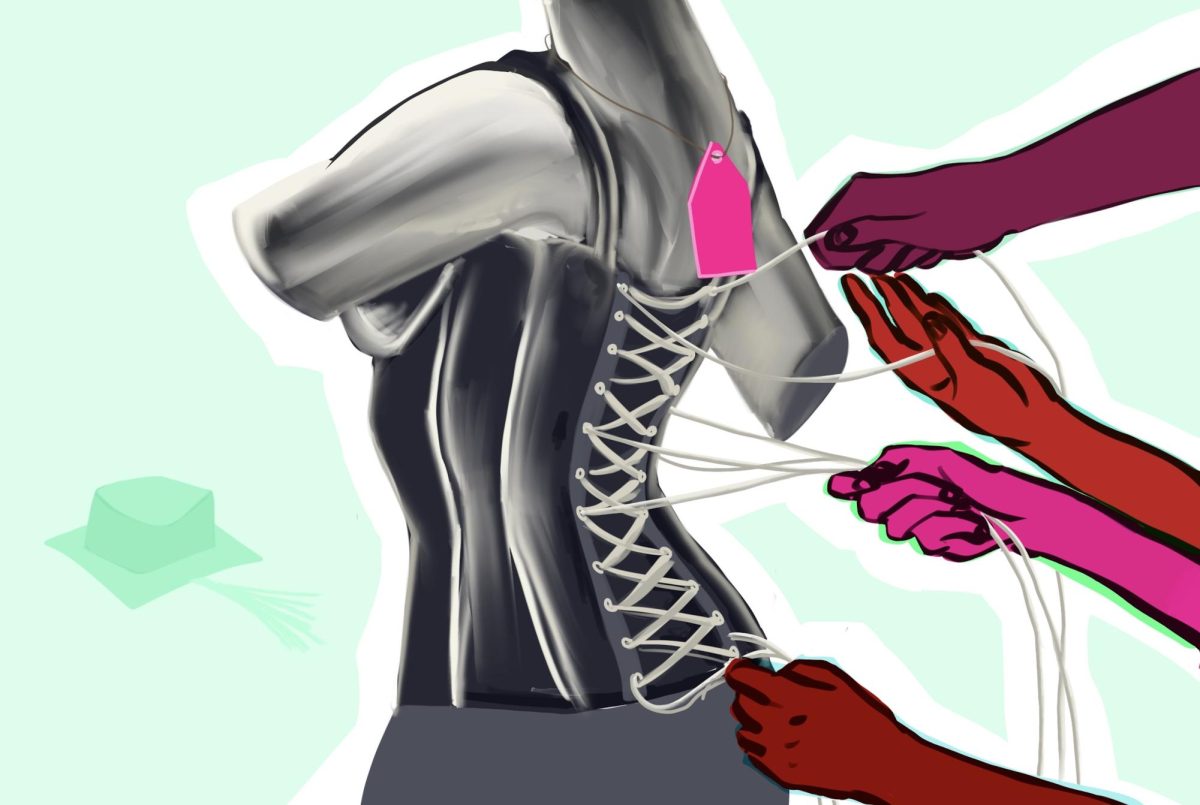
We can think of masking, or curating an online persona, as a kind of makeup for your social media face, “masking” your real appearance. An article by TheBrainCharity.com states that, though the term “masking” was originally coined to represent actions of disguise by neurodivergent individuals, nowadays masking is used to describe individuals customizing their online personas through a carefully curated feed. Remodelling one’s likes, reposts, and stories to ensure that they return a specific aesthetic or image.
Masking Culture
Throughout history, humans have flaunted their achievements for various reasons. Most often to make themselves more appealing to those they find attractive; to raise their chances of being accepted as high as possible, typically for fame, professional or economic advantages.
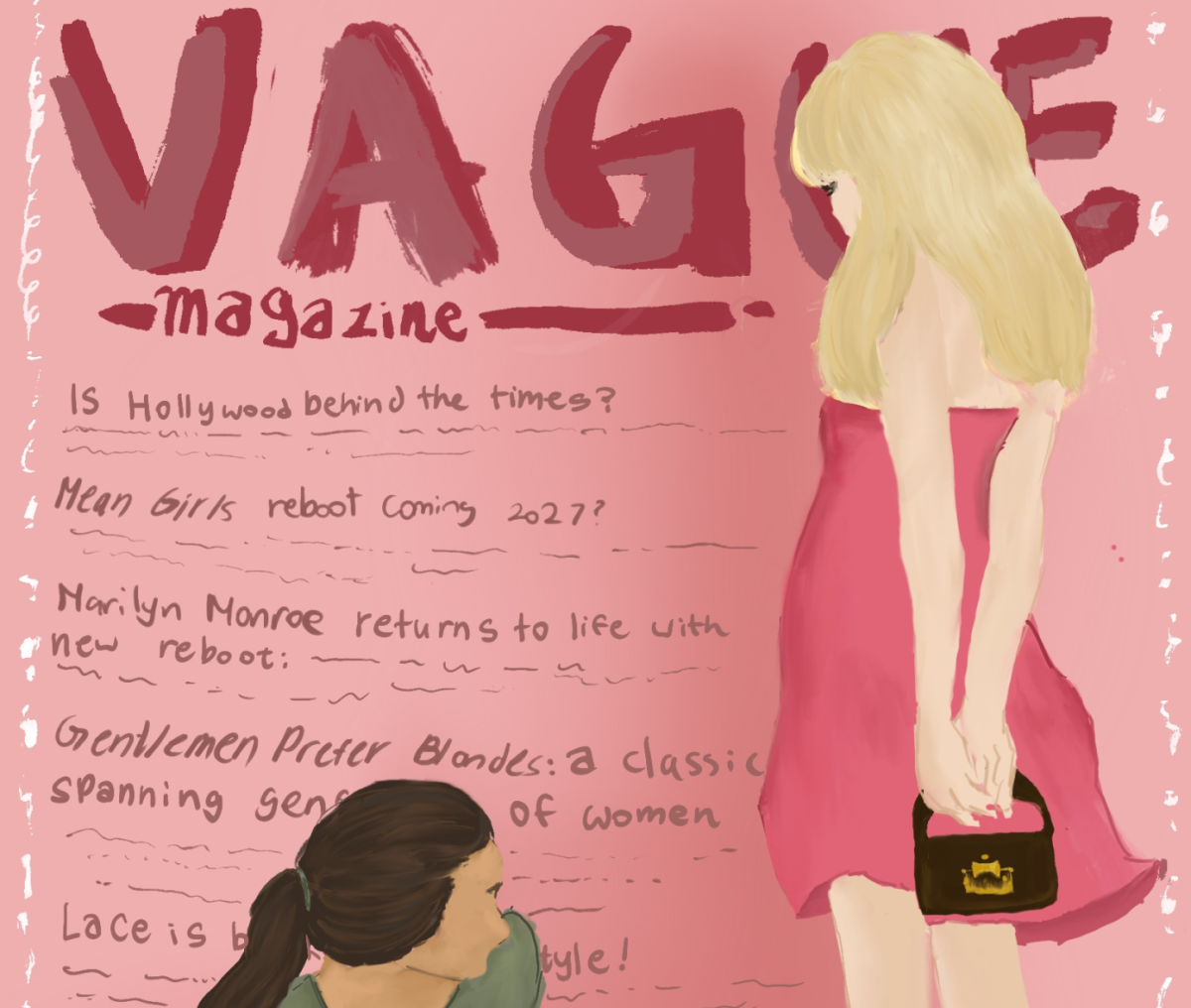
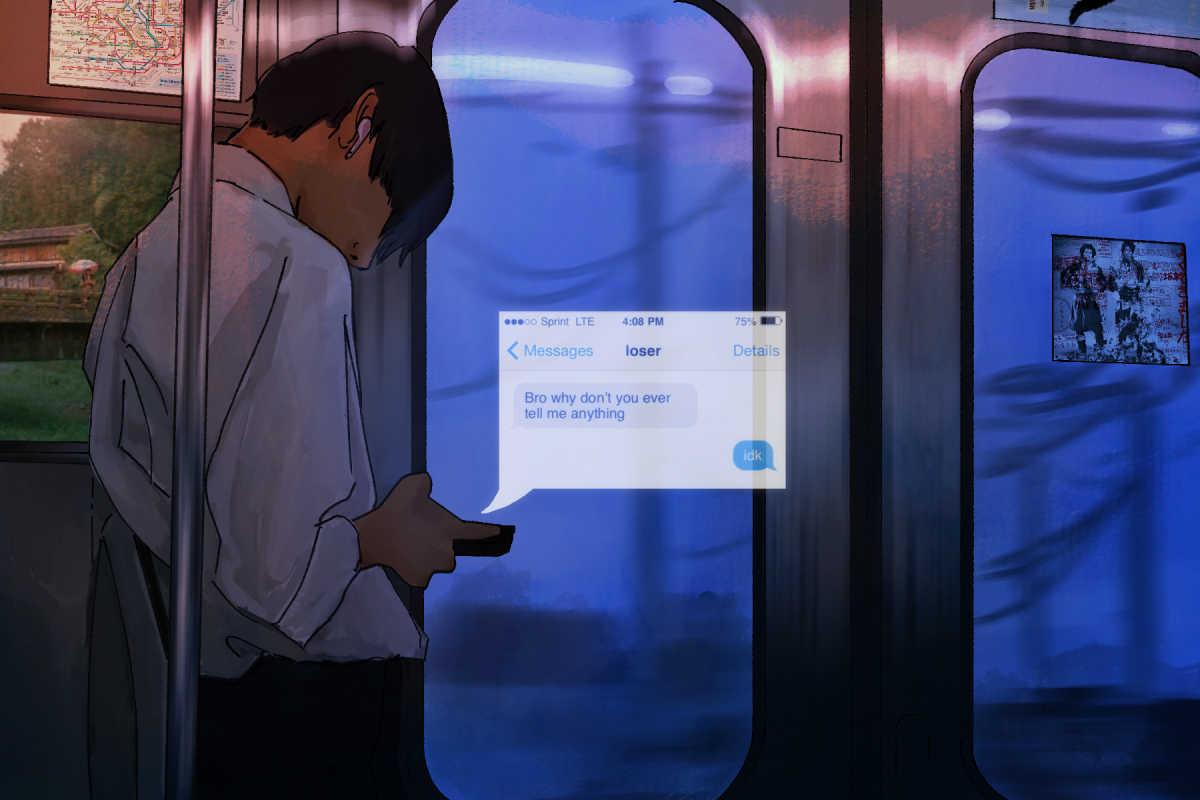
Teen masking online is based on the same ideas, except it utilises platforms and methods that did not exist until the early 2000s, such as Instagram, TikTok and Facebook. It is human nature to want to be accepted, especially for teenagers, and within this cycle of curation and response, a need for affirmation and popularity quickly becomes hard to overcome for developing adolescents. We are already naturally seeking this attention, and the seemingly airtight walls of the social-media world begin to leak into real life. Competing for online validation and follower figures leads to individuals struggling with the notion of meeting others in person, the worries of not being accepted as their actual selves outweighing the need for genuine human interaction.
Impacts of Masking
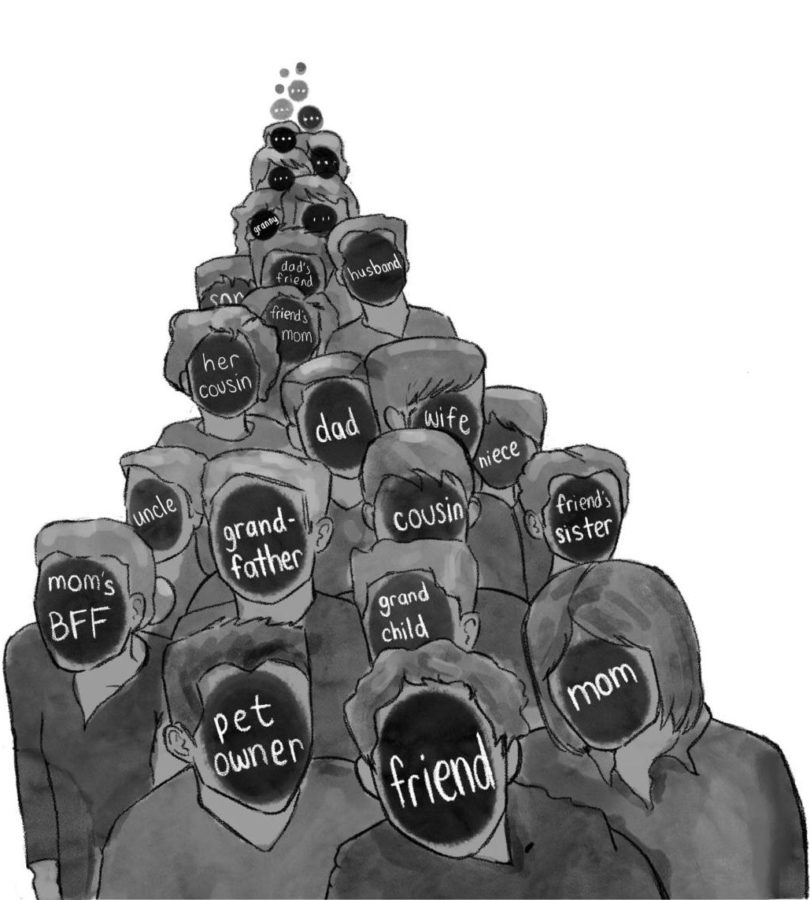
Besides masking negatively impacting the individual, those around them are also affected. Parents and siblings are often dragged into the same loop of unnecessary perfectionism and idealistic obsession, sometimes being asked to curate their own online appearance to appease the self-administered standards of their teen. Masking presses into every aspect of life, creating widespread and long-lasting problems, for the teen and their broader circles.
It is common for adolescents to set unrealistic expectations and unattainable standards for themselves, often breaching their own mental and physical limits to achieve them. On a societal scale, it seems obvious that the impacts of masking on whole generations of teenagers could be detrimental to society as a whole.
Others might argue that profile curation could be beneficial for teens struggling with poor self-image, or lacking confidence and communication skills; that it is offering individuals an opportunity to model themselves into a different image, make friends they otherwise wouldn’t, and feel connected in a way they may not feel when offline. Maybe masking offers a positive or even a critically needed boost to a teens’ sense of self-worth, belonging or social skills. Despite this apparent silver lining, on balance, masking has proven to be overwhelmingly detrimental for teens.
Lifting the Mask
Now more than ever, adolescents are forced to contend with a complex and often toxic online world that we do not always have the tools to navigate. A Return On Experience survey conducted by Edweek.Org shows more than half of teens active on social media are struggling to communicate, and are suffering with self-confidence issues; plenty of which have unconscious masking to blame for their problems. Many of us already struggling with fragile senses of identity and belonging are adrift in an online environment, where our masking may make us attractive targets for predatory adults – vulnerable and impressionable individuals being the typical mark for online grooming and other predatory acts. Without a safety net, this translates into endless potential dangers in the real world. Additionally, as teens’ online activities can be invisible to parents, families are likely struggling to support their teens, as traditional communication channels falter, and reliable sources of information about the dangers of masking are only beginning to emerge.
How future communities will function with such a large proportion of individuals wrapped up in this struggle remains to be seen, but the trends we can already see are alarming. From my perspective, much more needs to be done to support teens and prevent the worst effects of masking and its consequences.
Some large organisations in Australia have been ordered to place bans on social media within working hours, and Australia’s federal government currently prohibits social media and gaming communication platforms for those under 16 years of age. Other countries, notably the United Kingdom, are investigating and/or following in Australia’s lead. Sadly, after almost a decade of social media usage in today’s older teens, for some of us, the damage is already done.
Teens and young adults now possess online footprints that capture our entire online past, in digital trails that may include a history of masking, with potentially negative effects. If a teens’ posts or images are offensive or controversial, there is potential to jeopardize their future educational and work opportunities – with disadvantages that never expire. A rebellious adolescent phase could end up being the reason you are turned down for the future college or job of your dreams. Like a tattoo, it can be a permanent reminder of a temporary phase – except this one you cannot cover up.
The worst thing is, this seemingly innocent action is extremely addictive, it detracts from valuable activities and experiences that build us as individuals. We as teens may spend hours, if not more, meticulously editing, customizing and “personalising” our profiles, for a fictional persona.
So, if you lift the mask, what stares back? A cloud of insecurity and uncertainty. Teens unable to function in real life, plagued with anxiety and fear over the smallest interactions, worrying that they may be caught out in their lie.
How can we be expected to enter into adulthood with that state of mind?
What Can Be done?
Simply considering the potential ripple effects before posting goes a long way in preventing the effects of masking. On a larger scale, we need to spread awareness through education, so young individuals are not alone. As with other social ills, governments need to enact laws that protect adolescents and young adults from big tech.
Parents and communities need to create real-life opportunities for young people to interact, feel valued and develop genuine self-confidence. It is only through deliberate actions, and accountability, that we will be able to remove the mask permanently.