


























For much of the 20th century, the debate over cultural repatriation was a muted issue within museum institutions. In the last decade, however, it has grown into a global reconsideration of what it means to possess, return, and repair artifacts taken during colonial rule. From the restitution of the Benin Bronzes to Nigeria to the long-standing dispute over the Rosetta Stone from Egypt or the return of human remains to Tanzania, repatriation has become a central part of how nations reckon with colonial histories. Indonesia is now part of this movement as seen through state-led efforts and expanding institutional engagement.
In its simplest form, repatriation is “the act or process of restoring or returning something to the country of origin, allegiance, or citizenship.” Though in the context of cultural politics, it refers to the return of artifacts, artworks, sacred heirlooms, or ancestral remains to the communities of origin.
Beyond definition, repatriation is often justified by the role cultural objects play in sustaining collective memory and identity through history. Instead of being viewed simply as material objects, artifacts are seen as repositories of belief and social meaning. Hence, when removed, they disrupt the ability for cultures to preserve and transmit its past.
Returning these objects, therefore, becomes a matter of cultural continuity, ensuring that communities retain access to the material foundations of their own histories and traditions. From this perspective, repatriation is not about ownership alone, but about safeguarding the conditions necessary for a culture to endure and understand itself.
Seen through this lens, Indonesia’s experience with repatriation is shaped by a long history of cultural loss. During Dutch colonial rule (briefly interrupted by British control), thousands of sacred and ceremonial objects were removed from their original environments. Some were seized during military campaigns, others taken as coerced gifts, and many were looted. To this day, institutions such as the Rijksmuseum and the Tropenmuseum, located in Amsterdam, and the British Library in London, still house Indonesian artifacts that reflect a history of extraction rather than mutual exchange.
Yet, over the past several years, Indonesia has witnessed a surge in the return of artifacts, particularly those from the Dutch. In July 2023, the Dutch government returned 472 colonial-era artifacts to Indonesia, including a ceremonial kris, statues from the Singosari Temple, and a collection of royal heirlooms from multiple Indonesian kingdoms.
While the return in itself was significant, it raised several pressing questions: What does repatriation accomplish in practice? What is being returned beyond the object? And once home, how do these pieces reintegrate into Indonesia’s cultural ecosystem?
As such, these questions shift the attention away from the transfer itself and instead towards what happens after. This post-return work unfolds across several dimensions that together constitute what may be understood as the art of repatriation.
One facet lies in the work of interpretive reconstruction. Instead of solely resuming their place in a collection, returned artifacts re-enter a cultural environment capable of restoring meanings that were reduced or redirected abroad. In some instances, artifacts have little to no explanation of their original context or purpose, leaving them vulnerable to misinterpretation through Western frameworks. Hence, this process enables communities to reclaim narrative control over the objects using the social, ritual, and historical contexts from which they were previously separated.
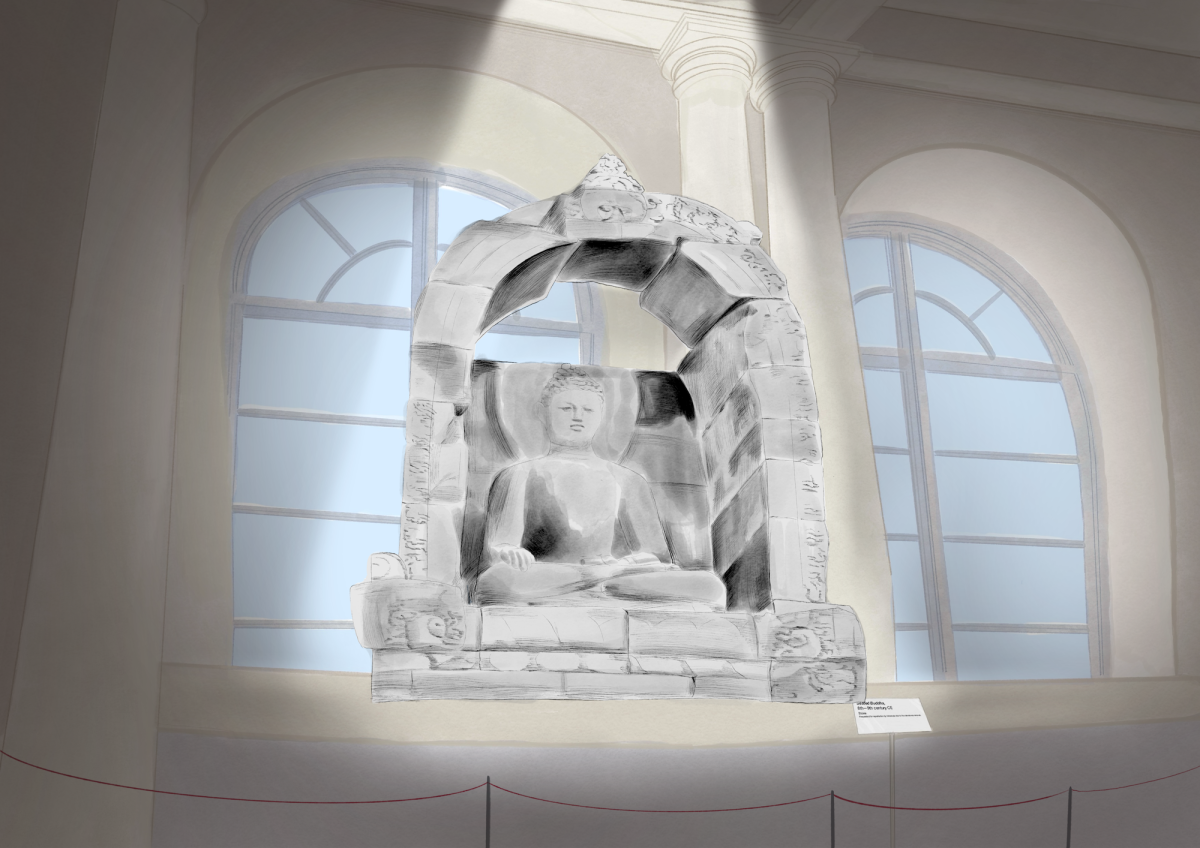
Furthermore, another dimension involves the institutional responsibility to reframe how returned artifacts are cared for and presented. While abroad, these objects are often displayed in galleries alongside items that share no cultural connection, or are grouped solely according to broad aesthetic or continental themes that obscure their original purpose and significance. Such arrangements, therefore, privilege aestheticism over contextual accuracy, leaving the objects detached from their initial environments and meaning. Their return allows Indonesian museums and other cultural institutions to correct these misplacements by situating the artifacts within historically and spiritually informed exhibits. When appropriate, they can also be placed back into restricted archives if their use was intended to remain private or sacred. Through this reframing, institutions restore the appropriate context and stewardship to these artifacts, beyond simply placing them behind any glass case in a museum.
A third facet involves the academic and communal engagement that often accompanies these returns. Repatriation serves as a starting point for renewed research, public discussion, and community engagement. Scholars use the return of objects to compare existing records, reconstruct missing historical details, and correct misinterpretations that arose when the objects were held in foreign collections. Local communities contribute by sharing oral histories, ritual knowledge, and contextual information that may not have been documented in colonial archives. Through this combined work, any gaps in cultural knowledge or fragmented narratives are clarified. In some settings, this process also supports cultural repair by restoring connections between objects and the communities that once cared for them.
However, despite growing support, repatriation in itself remains a complex act to achieve due to the political interests involved. Museums argue that certain collections should remain “universally accessible”—meaning available to larger audiences, such as in Western museums that attract many tourists—while others point to incomplete provenance or question whether communities still maintain ties to the traditional function of an object. As a result, the process is often slow and contested, with both museums and governments claiming stronger custodial capacity and insisting that the artifacts are better served under their own care.
Ultimately, the art of repatriation lies in the restoration of the authority to interpret and represent cultural heritage within its rightful context. For Indonesia and other nations shaped by colonial histories, repatriation offers an opportunity to reconstruct fragmented narratives and continue telling the stories that, although interrupted, were never really truly erased.