











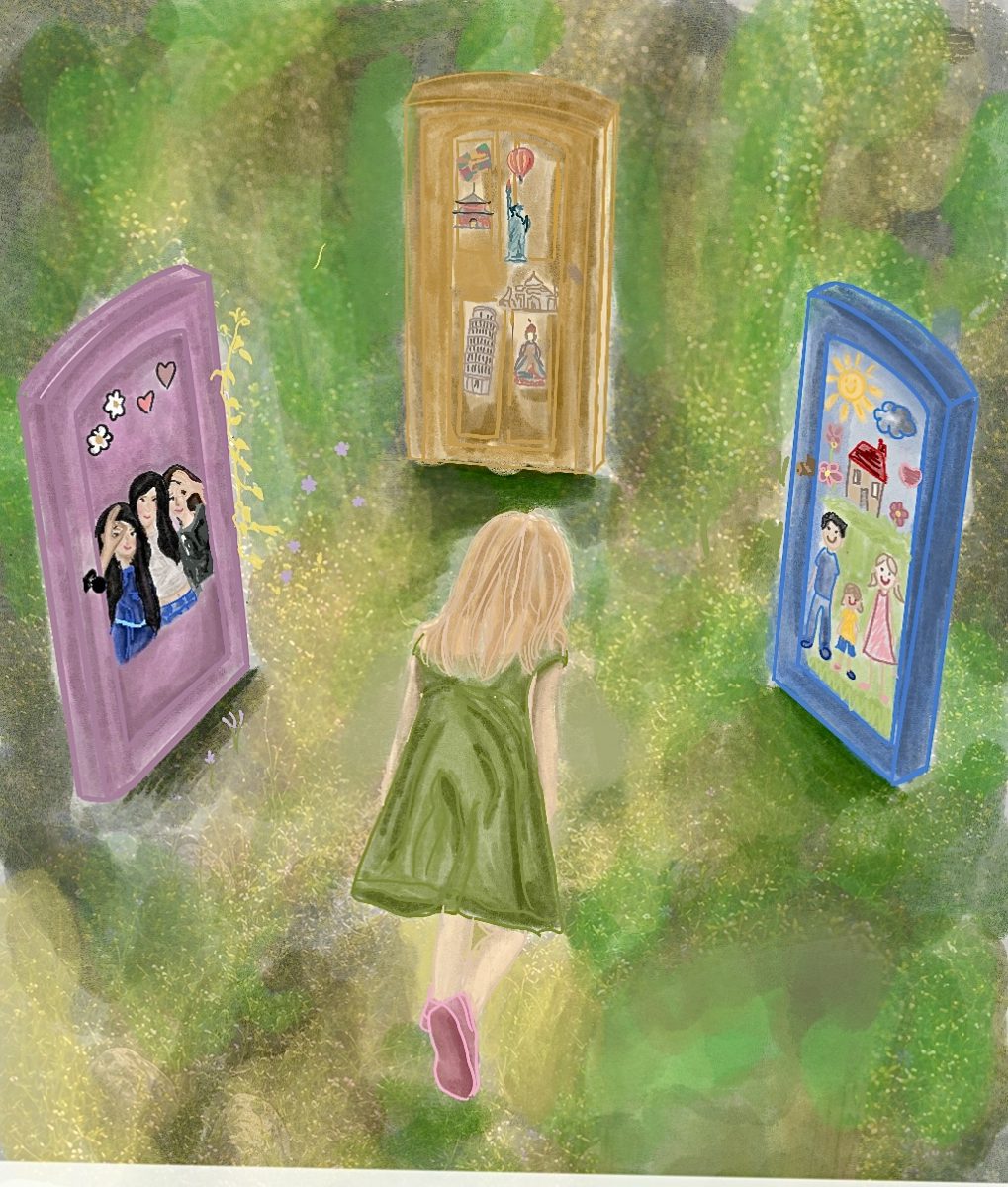


Love triangles have long existed in storytelling, but the recent surge in film and television suggests a shift in how we perceive them. No longer framed as simple competitions between two romantic options, these dynamics now reveal deeper questions about identity, self-perception, ambition, timing, and the emotional histories that shape our attachments.
Over the past few years, this evolution has become unmistakable across several standout works. The four series and films that follow illustrate how the modern love triangle has shifted into a deeper reflection of contemporary relationships. For those who have not watched them yet, please note that the following contains spoilers.
Daisy Jones and the Six (2023)
Originally a historical fiction novel by Taylor Jenkins Reid, this series was released in March of 2023 and revolves around the rise and fall of a fictional 1970s rock band. At its center is a love triangle between lead singer Billy Dunne, his wife Camilla Alvarez, and the new frontwoman of his band, Daisy Jones.
Before the band achieved nationwide fame, Billy’s world was grounded by Camilla—a level-headed and committed figure through his struggles with addiction and infidelity. On the other hand, Daisy represented creativity and chaos. Billy and Daisy face the emotional intimacy that comes from being each other’s muse, bound together by their shared pains. However, their connection was fated to fail at the time, ignited by their artistry but limited by what Billy cannot abandon.
In Daisy Jones, the love triangle is an implicit truth that is mutually understood. Camilla recognizes the growing pull between Billy and Daisy, but refuses to be a victim or unsettle her family. Daisy acknowledges her situation, but can’t turn away. Daisy Jones and The Six explores the idea of being with the right person at the right time—and the maturity needed to recognize that. While viewers may only see Daisy as a passing romance for Billy, a reminder of his most intense times, the show concludes with a seemingly optimistic ending for the pair, as they are reunited decades later, after Camilla’s passing. The audience sees that the lesson is in timing and evolving, rather than a clear choice between two people.
The Summer I Turned Pretty (2022-2025)
Adapted from Jenny Han’s young adult novel trilogy, the series follows Isabel “Belly” Conklin’s emotional evolution across three seasons at Cousins Beach, where her longstanding bond with the Fisher brothers, Conrad and Jeremiah, transforms from an innocent childhood friendship into something more complex and enduring.
For Belly, Conrad represents the past: complicated and threaded with the weight of shared history. Jeremiah, by contrast, embodies the present warmth, openness, and the promise of a love uncomplicated by ghosts. The show begins as a coming-of-age story, but unfolds into a meditation on memory, loss, and the gravitational pull of a love that refuses to fade.
Belly’s final decision to choose Conrad over Jeremiah does not signal naive loyalty or romantic fatalism; it marks her acceptance of the fact that human attachment rarely follows logic. We are often drawn not to what is easiest, but to what has shaped us. The series resonates deeply with modern viewers because it portrays how love is not always about seeking what feels new or efficient, but about re-embracing the emotional terrain that has shaped us over the years.
The Summer I Turned Pretty reframes the modern love triangle not as a competition for affection but as a study in the persistence of emotional history. It suggests that the heart does not always privilege clarity or novelty, but familiarity—the kind of love that feels like familiar memory, and that continues to shape who we are long after we have outgrown its simplicity.
Challengers (2024)
The film centers on Tashi, Art, and Patrick, professional tennis players who have been embroiled in a complex dynamic since the beginning of their careers. Tashi Duncan, a prodigy who turned to coaching after a career-ending injury, now trains her husband, Art, while her ex-boyfriend Patrick struggles to maintain his rankings.
In a storyline developed through the characters’ drive to succeed in tennis, the added pressure of being professional rivals creates a love triangle that explores competition in romance
and beyond. Tashi uses Patrick and Art as a means to relive her failed career, shifting her attention to whoever she thinks is performing best. What comes from this is a manipulative cycle of affairs and insincerity, with characters who prioritize victory over genuine affection.
The final scene features a tennis tiebreaker between Patrick and Art. The climax, filled with swift shots and an even sharper musical score, culminates in a lengthy point that builds to the film’s greatest suspense. Who won the match? Beyond that, who really is the winner in this relationship? For Guadagnino, he intended an “open-ended” resolution. Whether it is Art, Tashi, or Patrick, the choice is with the audience.
For viewers, the Challengers triangle reflects the mindset of “winning” in a relationship that has become increasingly present in modern times. When your success and pride depend on those of your partner, it becomes difficult to distinguish between validation for love and rivalry for passion.
Materialists (2025)
In Celine Song’s Materialists, love and identity are not separate pursuits but overlapping acts of self-construction. The film follows Lucy, a former actress turned matchmaker for elite clients in New York, whose professional life revolves around crafting other people’s happy endings while keeping her own emotions carefully at bay. That distance, however, begins to collapse when she meets Harry, a wealthy financier, and reconnects with John, her ex-boyfriend and struggling actor.
With Harry, Lucy steps into a version of herself that is seemingly perfect and complete. Her attraction to him is not purely emotional but rather aspirational; Harry embodies the life she has spent years matching others into, the kind of stability her own profession promises but never fully provides. John, by contrast, exists outside that system. Their relationship is neither sleek nor convenient, but it grants Lucy the rare permission to be someone less edited.
As a matchmaker, Lucy profits from selling an idealized version of connection, yet the very system she upholds demands her own emotional restraint. In choosing between Harry and John, Lucy must decide whether to live by the algorithm of desirability she helped design or to step outside of it entirely.
This dynamic resonates with modern audiences because it reflects a distinctly contemporary anxiety: that selfhood itself has become a performative construct. In a world where identity is curated across platforms, relationships often become mirrors through which individuals confirm or reimagine their sense of self. In Materialists, Lucy’s decision is not simply about who to love, but who to become through that love.
Though triangles are traditionally defined by three sides and corners, these films and series show that the trope goes beyond simple geometry to explore the complexities of emotional bonds between people.